Practice Area

Geographical Indication Services

A geographical indication marks out a good — Darjeeling Tea, Kanchipuram Silk, Basmati Rice — as coming from a specific place, where a quality, reputation or other characteristic of the good is essentially owed to that origin. Registered under the Geographical Indications of Goods (Registration & Protection) Act, 1999, it protects an entire producing community rather than a single owner. Biswajit Sarkar represents producer associations and authorised users through that full process.
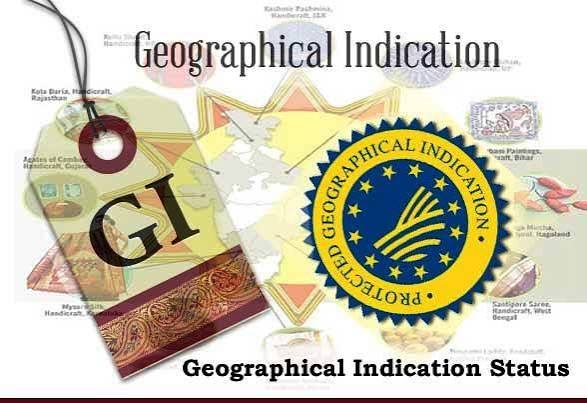

Geographical Indication services at Biswajit Sarkar

Our GI team works with producer associations and authorities from application through opposition, keeps registrations renewed and authorised users current, and pursues misuse of a region's name — at home and, where the law of that country allows it, abroad.

Stage 01

What qualifies, and who can apply

A geographical indication is collective by nature — it belongs to everyone producing the good in that region, not to one company. Section 11 of the Act reflects that: only an association of persons, producers, or an organisation or authority representing producers' interests can apply, not an individual producer alone.

Collectiveright — a GI is registered for a community of producers, never for one individual owner
2 partsto the Register: Part A for the GI itself, Part B for its authorised users
Chennaiis where the GI Registry, the sole registering authority for India, is based
Stage 02

GI registration process

Section 9 bars registration of terms that are generic, deceptive, or contrary to law or morality. Once a term clears that bar, registration runs through six stages, each requiring more supporting evidence than a typical trademark filing.

  1. 01

    Application

    Filed under Section 11 by the producer association, along with a statement of how the good's quality or reputation is tied to the region, a map of the geographical area, and particulars of the producers it covers.

  2. 02

    Examination

    An examiner reviews the application against Section 9's grounds for refusal and the supporting evidence of the good's link to its origin, issuing an examination report that the applicant must respond to within the prescribed period.

  3. 03

    Show-cause hearing

    If objections in the examination report aren't resolved on paper, the applicant can request a hearing before the Registrar to argue the case directly.

  4. 04

    Acceptance & publication

    An accepted application is published in the Geographical Indications Journal, opening a three-month window — extendable by a further month on request — during which any person may oppose it.

  5. 05

    Opposition period

    If no opposition is filed, or one is filed and decided in the applicant's favour, the application proceeds to registration.

  6. 06

    Registration & certificate

    The GI is entered in Part A of the Register and a Certificate of Registration issued. Producers can then apply separately, under Section 17, to be entered in Part B as authorised users.

Stage 03

GI opposition & rectification

As with trademarks, a GI can be challenged before it registers and after — the grounds and the forum differ depending on which stage the challenge is raised at.

Section 14

Opposition (pre-registration)

Filed on Form GI-5 within three months of the application's advertisement in the GI Journal, extendable by one further month on request. Common grounds include the term being generic, deceptively similar to an existing GI or trademark, or the application falling foul of Section 9 or Section 10's requirements.

  • Applicant files a counter-statement within 2 months of notice
  • Both sides file evidence in successive rounds
  • Registrar hears both parties before deciding whether to register the GI
Section 27

Rectification & cancellation (post-registration)

Filed by an aggrieved person before the Registrar or the relevant High Court, following the transfer of the erstwhile Appellate Board's functions under the Tribunals Reforms Act, 2021, seeking to remove or correct an entry made without sufficient cause, wrongly remaining on the Register, or no longer reflecting the good's link to its region.

  • Petition sets out the specific ground and supporting evidence
  • The registered proprietor is given an opportunity to respond
  • Outcome can be removal, correction or amendment of the entry
Stage 04

GI renewal

A GI registration runs for ten years from the date of registration, much like a trademark, and can be renewed indefinitely — but the registration of an authorised user needs to be kept current separately.

Stage 05

GI infringement

Section 22 covers more than simple counterfeiting — a use that misleads the public about a good's true origin can infringe even where it's dressed up with a qualifier like "style" or "type".

Section 22

Direct misuse

Using a registered GI on goods that don't originate from the specified region, or using it in a way that suggests a false geographical origin to the public, or that amounts to unfair competition against genuine producers.

Section 22

Disguised misuse

Using the GI on comparable goods from elsewhere even where the true origin is separately indicated, or where the GI is used alongside words like "kind", "style", "type" or "imitation" — the qualifier doesn't cure the confusion the Act is aimed at.

CivilInjunction, damages and an account of profits are available under Section 67 once infringement is shown
CriminalSections 39 and 40 make certain acts of misuse a cognisable offence carrying imprisonment and a fine
CustomsGoods falsely bearing a registered GI can be flagged with Customs for seizure at the border
Stage 06

International protection

GIs don't have a single filing route the way patents have the PCT or trademarks have the Madrid Protocol. India isn't party to the Lisbon Agreement's Geneva Act, the treaty that offers that kind of unified registration, so protection abroad is built country by country.

  1. 01

    TRIPS baseline

    Articles 22 to 24 of the WTO's TRIPS Agreement require every member country to offer some legal means of preventing GI misuse, with an additional, stricter layer of protection reserved for wines and spirits.

  2. 02

    No single international registration

    Because India hasn't joined the Lisbon Agreement or its 2015 Geneva Act, an Indian GI holder can't get protection across multiple countries through one WIPO filing the way a Madrid trademark application can.

  3. 03

    Filing abroad, country by country

    Where a jurisdiction has its own GI regime — the EU's PDO/PGI system, for instance — protection is sought by filing directly with that country's or region's designated authority, under its own procedure and evidentiary standards.

  4. 04

    Bilateral & trade-agreement recognition

    Individual Indian GIs — Darjeeling Tea's recognition in the EU is a well-known example — have secured protection abroad through bilateral negotiation or as part of free trade agreement talks, rather than through a single treaty mechanism.

  5. 05

    Reciprocal protection for foreign GIs in India

    India extends registration under the Act to GIs originating in WTO member countries and other notified countries on a reciprocal basis, following the same registration process as an Indian GI.

  6. 06

    Ongoing policy discussion

    India's possible accession to the Geneva Act of the Lisbon Agreement remains under policy discussion — joining it would let Indian GI holders seek recognition across all its member states through a single filing.

Get Started

Ready to protect
where it's from?

Send us your queries and we'll get back to you.

Let's Talk